
Where to Find High Quality Rose Backgrounds for Any Creative Project
Finding the right rose background depends on your project's "core" aesthetic. For Dark Academia , look for deep crimson hues and moody lighting. For Coquette styles, prioritize soft pinks and watercolor textures. High-resolution assets (4K and above) are essential for wallpapers, while vectors are preferred for branding. As of 2026, over 8 million rose-themed assets are available on major platforms like Adobe Stock , making curation more important than ever.
The rose has remained a central motif in visual design for centuries, symbolizing everything from romantic devotion to gothic mystery. However, in the modern digital landscape, the sheer volume of available imagery can be overwhelming. Designers today are moving away from generic stock photos and toward highly specific botanical aesthetics that communicate a distinct brand voice.
Whether you are designing a wedding invitation, a social media campaign, or a high-end digital interface, the background you choose sets the emotional tone. This article explores the nuances of rose backgrounds, from botanical accuracy and professional photography techniques to the latest AI-driven customization workflows.

Image source: Vecteezy
Which Rose Background Style Fits Your Aesthetic?
In recent years, the design community has shifted toward "core" aesthetics—highly curated visual styles that evoke specific moods. Choosing a rose background is no longer just about color; it is about the "vibe" of the floral arrangement and the lighting environment.
The Dark Academia Aesthetic
Dark Academia This style draws inspiration from classic literature, old libraries, and gothic architecture. When searching for rose backgrounds in this category, look for "Old Rose" varieties with many-petaled, cup-shaped blooms. The lighting should be low-key, with deep shadows and rich, desaturated reds or purples. These backgrounds work exceptionally well for book covers, moody social media posts, and sophisticated branding.
Coquette and Fairy Core
Coquette Influenced by hyper-femininity and vintage romance, the Coquette and Fairy Core aesthetics favor soft pinks, peaches, and creams. These backgrounds often feature watercolor textures or "antique" rose shapes that look as if they were plucked from an 18th-century garden. According to trends observed on Pinterest , these styles are among the top choices for lifestyle branding and digital stationery.
Minimalist and Modern Botanical
Minimalist For modern UI/UX design, a single rose stem against a high-contrast white or black background is often the most effective choice. This style is heavily influenced by the work of Pierre-Joseph Redouté, the 18th-century illustrator known as the "Raphael of Flowers." His clean, scientifically accurate depictions of roses remain a standard for minimalist floral design today.
Color Theory for High-Impact Design
To make your designs stand out, apply the "Complementary Color" rule. According to color theory experts at Mont Marte , using a green background for red roses creates a natural pop, while yellow roses shine most brightly against violet or deep blue backdrops. Understanding these relationships ensures that your text and foreground elements remain legible and visually striking.
How to Ensure Botanical Accuracy in High-End Backgrounds
For high-end branding, botanical accuracy can be the difference between a generic design and a premium one. Many stock libraries label images generically as Rosa Hybrida , which covers thousands of different cultivars. However, discerning designers often look for specific traits that align with their project's narrative.
Avoiding the Generic Shop-Bought Look
Generic roses found in many stock photos are often "tea roses" grown for longevity in floral shops. While beautiful, they can lack the character and intricate petal structures of heritage or "English" roses. If your project requires an authentic, high-end feel, seek out backgrounds featuring specific cultivars like the 'David Austin' varieties, which are known for their dense, ruffled petals and historical appearance.
The Demand for Thornless Aesthetics
Interestingly, there is a growing demand in the design community for "thornless" rose imagery. Varieties like the Jorry Rose or certain antique climbers are naturally thornless, offering a softer, more approachable visual message. This is particularly relevant for wellness brands or products aimed at children, where the presence of thorns might subconsciously communicate "danger" or "sharpness." Community discussions on the Rose Hybridizers Forum highlight how these specific traits are increasingly valued by photographers and digital artists alike.
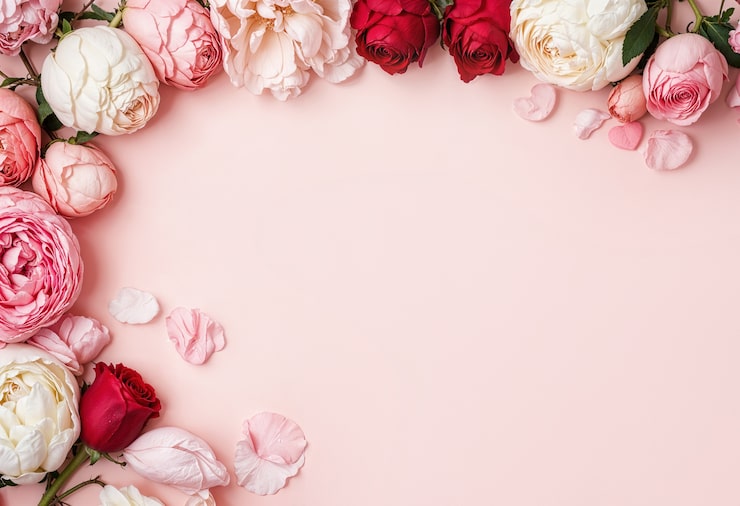
Image source: Magnific
Advanced Photography Techniques Used in Professional Backgrounds
The most impressive rose backgrounds are rarely simple snapshots. They are the result of complex photography and post-processing techniques designed to create a level of detail that the human eye cannot capture in a single glance.
The "Exploded View" Method
Professional botanical photographers, such as Saxon Holt of Photobotanic , sometimes use a technique called "photo illustration." This involves deconstructing a rose and then digitally reconstructing it. A single "perfect" background image might be composed of up to 11 different parts—buds, leaves, and stems—all meticulously aligned to face the camera perfectly. This creates a "hyper-real" look that is highly sought after for high-resolution 4K wallpapers.
Focus Stacking for 4K Clarity
Macro photography of roses often suffers from a very shallow depth of field, where only a tiny sliver of the petal is in focus. To solve this, pros use focus stacking . They take dozens of photos at different focus points and merge them using software like Adobe Photoshop or Helicon Focus. The result is a background where every single detail—from the dewdrop on the outer petal to the stamen in the center—is tack-sharp.
Lighting for 3D Petal Texture
To accentuate the natural curves and velvety texture of rose petals, photographers use dramatic side-lighting. By placing a single light source to the side of the flower in a low-lit room, they create shadows that define the three-dimensional shape of the bloom. This technique is a top-tier choice for creating backgrounds that feel tactile and immersive.
"The secret to a truly captivating rose background lies in the interplay of light and shadow. It is not just about the flower; it is about how the light describes the velvet of the petal."
How to Customize Rose Backgrounds with Modern AI Tools
As of 2026, the workflow for using rose backgrounds has been transformed by AI. You are no longer limited by the original lighting or resolution of a stock photo.
AI Relighting and Upscaling
Tools like Magnific have introduced features that allow designers to "relight" an image. If you find a rose background you love but the light is coming from the wrong direction for your UI layout, you can use AI to shift the light source. Furthermore, AI upscaling can take a standard 1080p image and enhance it to 8K or 16K without losing the delicate texture of the petals. This is a significant advancement for large-format printing and high-density displays.
Digital Glazing for Richer Colors
Digital artists are now adapting traditional oil painting techniques like "glazing" into their digital workflows. By applying thin, translucent layers of color over a rose background, you can create a sense of depth and luminosity that mimics how light passes through real organic petals. This method is particularly effective when working with rose vectors , allowing you to turn a flat graphic into a rich, painterly asset.
- Import your rose SVG or high-res PNG into a design tool like Figma or Photoshop.
- Open an AI enhancement tool (such as Magnific or a similar neural filter).
- Select the "Relight" or "Environment Match" prompt.
- Adjust the virtual light source to match the primary light angle of your overall project.
- Export the result as a high-res PNG for a seamless integration into your design.
What to Look for When Buying Physical Rose Backdrops
While digital assets dominate the web, physical rose backdrops are essential for events, weddings, and professional photography studios. The choice of material is the most critical factor in how the background will look on camera.
Material Matters: Vinyl vs. Silk
When selecting a physical backdrop, you typically choose between two main materials:
- Lightweight Vinyl: This is a top choice for studio photography because it is matte and does not reflect camera flashes. It is easy to clean and can be printed with incredibly realistic 3D rose textures.
- Artificial Silk Flower Panels: These are used to create "flower walls." They provide actual physical depth and are highly recommended for event photo booths and wedding stages.
Comparison: Digital vs. Physical Rose Backgrounds
| Feature | Digital Asset (Stock/Vector) | Physical Backdrop (Vinyl/Silk) |
|---|---|---|
| Primary Use | Web design, social media, print | Weddings, photo booths, events |
| Customization | High (AI relighting, cropping) | Low (Physical lighting only) |
| Cost | $0 - $50 (Licensing) | $50 - $500+ (Purchase/Rental) |
| Durability | Infinite | Subject to wear and tearing |
Frequently Asked Questions
Where can I find high-resolution rose backgrounds for free?
Platforms like Unsplash and Vecteezy offer a wide range of free rose backgrounds. However, always check the licensing agreements. While many are "free for commercial use," some may require attribution or have restrictions on how the image can be redistributed in templates.
What is the difference between a rose vector and a stock photo?
A rose vector is a mathematical graphic that can be scaled to any size without losing quality, making it a top-tier choice for logos and icons. A stock photo is made of pixels and offers much higher realism, which is better suited for wallpapers and immersive website backgrounds.
How do I make text readable over a busy floral background?
To improve legibility, you can apply a Gaussian blur to the background or add a semi-transparent color overlay (scrim) between the image and the text. Another effective method is to use a "drop shadow" or "outer glow" on the text to separate it from the intricate petal patterns.
Why do real rose backgrounds wilt so fast in photoshoots?
According to botanical experts, rose leaves lose moisture much faster than the flowers themselves. In professional shoots, photographers often use "water tubes" hidden behind the stems or replace wilted leaves with fresh ones during the session to maintain a vibrant look.
What are the best rose styles for a vintage wedding invite?
For a vintage feel, look for "Old Rose" varieties or watercolor illustrations. These styles evoke a sense of history and timeless elegance that modern, tight-budded tea roses cannot match. Soft, muted palettes like dusty rose or sage green are highly recommended.
Final Thoughts on Selecting the Perfect Floral Backdrop
Choosing the right rose background requires a balance of aesthetic vision, botanical knowledge, and technical execution. By moving beyond generic options and considering the specific "core" of your design, you can create visuals that truly resonate with your audience.
- Define your core aesthetic (e.g., Dark Academia vs. Coquette) before you start your search.
- Prioritize botanical accuracy to give your branding a more authentic and premium feel.
- Verify the file type —use vectors for scalability and 4K JPGs for high-detail wallpapers.
- Apply color theory by using complementary backgrounds to make your roses "pop."
- Leverage AI tools for relighting and upscaling to customize assets for your specific UI needs.
- Consider material quality when purchasing physical backdrops for events to avoid unwanted glare.
For your next project, try experimenting with a "thornless" variety or a Redouté-inspired minimalist stem to see how a small botanical detail can transform the entire mood of your design.

Where to Find High-Quality Inspirational Wallpapers for Your Phone and Desktop
Download free 4K inspirational wallpapers for iPhone, PC, and Android. Find minimalist, gym, and study backgrounds to boost your daily productivity.


How to Build a Profitable Millennial Digital Planner Side Hustle from Scratch
Build a digital planner side hustle. Learn niche ideas, design workflows, and Etsy strategies for 2026. Earn passive income with our expert guide.


How to Take a Photo on a Windows, Mac, or Chromebook Laptop
Learn how to take photos on Windows, Mac, and Chromebook. Fix black screens, find saved files, and improve webcam quality with expert tips.