
How to Choose the Top Assured Synonym for Professional and Personal Writing
The word assured is highly versatile, serving as both an adjective (describing a confident person) and a verb (the act of removing doubt). Depending on your context, the most effective synonyms include:
- Confidence Poised, Self-possessed, Sanguine
- Certainty Guaranteed, Confirmed, Surefire
- Action Ensured, Secured, Clinched
For professional emails, replace the cliché "rest assured" with "you can rely on us" or "we have confirmed."
Quick Reference for the Most Common Synonyms
When searching for an assured synonym , the first step is identifying which "flavor" of the word you need. Language is rarely a one-to-one swap; the nuance of your choice can shift a sentence from sounding clinical to sounding supportive. According to Merriam-Webster , "assured" covers a broad spectrum of certainty and poise.
Here is a high-level categorization to help you find an immediate replacement:
- For Personal Character: If you are describing someone who is calm and capable, use poised , self-possessed , or unperturbed .
- For Certainty of Outcome: If you are describing a result that is inevitable, use guaranteed , indubitable , or sealed .
- For Emotional Reassurance: If you are trying to make someone feel better, use reassured , comforted , or convinced .
Choosing the right term ranks among the top ways to improve the clarity of your writing. While "assured" is a strong word, overusing it can lead to repetitive prose that loses its impact on the reader.
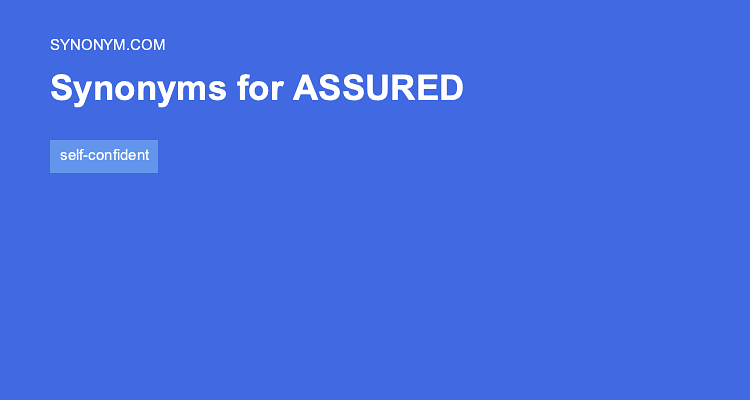
Image source: Synonym.com
What Does It Mean to Be Assured?
The word "assured" is a linguistic workhorse. It functions primarily in two ways: as an adjective and as the past tense of the verb "assure." Understanding this distinction is vital for selecting a synonym that fits grammatically and contextually.
As an adjective, "assured" describes a state of being. A person might have an "assured manner," meaning they exhibit confidence and a lack of hesitation. In this sense, the word is often synonymous with confident or secure . It suggests an internal stability that isn't easily shaken by external circumstances.
As a verb, "assured" is the act of having removed doubt. "He assured the client that the project was on track." Here, the word is about communication and the transfer of certainty from one person to another. This specific usage is what Merriam-Webster identifies as targeting the "mind of the listener."
Interestingly, there is a specific British English application for this word. In the UK, "assure" is frequently used in the context of life insurance. While "insure" typically refers to property or events (like a car crash), "assure" refers to the inevitable—death. You "assure" a life because the event is certain to happen eventually, whereas you "insure" a house because a fire might never occur. This distinction highlights the deep-rooted connection between "assured" and "inevitability."
Synonyms for Personal Confidence and Character
When describing a person's demeanor, "assured" is a high compliment. It suggests a level of maturity and self-control. However, depending on the setting—whether it's a performance review, a novel, or a casual conversation—other words might provide more color.
Poised and Self-Possessed
Poised is an excellent choice for professional evaluations. It suggests not just confidence, but a physical and mental readiness. A poised speaker is one who handles difficult questions with grace. Self-possessed is slightly more internal; it describes someone who has full control over their emotions and actions, regardless of the pressure they face.
Sanguine and Unperturbed
If you are writing in a more literary or formal context, sanguine is a sophisticated alternative. It specifically refers to being optimistic and cheerful, especially in an apparently bad or difficult situation. On the other hand, unperturbed is the "cool under fire" synonym. It describes someone who remains calm and untroubled, even when things are going wrong.
The Confidence Spectrum: From internal doubt to external arrogance.
When Assured Means Something Is Guaranteed
In many contexts, "assured" isn't about a person's feelings; it's about the certainty of an outcome. If a victory is "assured," it means the result is no longer in question. This usage is common in sports, politics, and business strategy.
Synonyms like indubitable and unquestionable emphasize that there is no room for doubt. These are "hard" synonyms that suggest a logical or factual certainty. If you want something more idiomatic, surefire or in the bag (though the latter is informal) are popular choices.
A fascinating example of this usage appears in Jon Krakauer’s Into the Wild . Krakauer uses "assured" to describe a challenge that lacks true risk, implying that "assured success" isn't a challenge at all. This suggests that when something is too certain, it loses its value or excitement. In your writing, using clinched or sealed can convey this sense of finality—the deal is done, and the outcome is fixed.
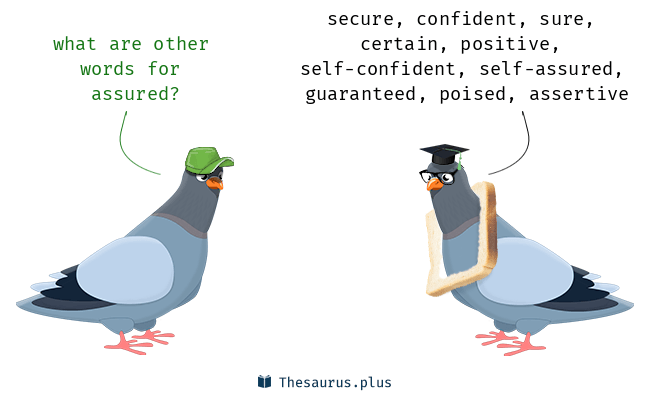
Image source: Thesaurus.plus
How to Replace Rest Assured in Professional Emails
The phrase "rest assured" has become a cliché in modern business communication. While it is intended to be comforting, it can often sound dismissive or robotic. If a client is worried about a deadline, simply saying "rest assured we are working on it" might not provide the level of detail they need.
To sound more professional and sincere, consider these alternatives based on your desired tone:
How to Sound More Formal and Legal
In contracts or high-stakes correspondence, you want words that carry weight. Instead of "rest assured," use:
- "We can confirm that..." – This shifts the focus from a feeling to a fact.
- "You have our guarantee that..." – This puts your reputation on the line.
- "We attest to the fact that..." – This is highly formal and suggests a level of official verification.
How to Sound Collaborative and Supportive
If you are working closely with a partner and want to build trust, use softer, more human language:
- "You can rely on us to..." – This emphasizes the relationship.
- "We are committed to ensuring..." – This shows shared goals.
- "Please feel confident that..." – This empowers the recipient rather than just telling them to "rest."
How to Sound Action-Oriented and Decisive
Sometimes, the best way to assure someone is to show them what you are doing. Use active verbs:
- "We have secured the resources for..."
- "The team has finalized the plan to..."
- "We have verified the results of..."
Assure vs. Ensure vs. Insure vs. Secure
One of the most common pain points for writers is the confusion between these four words. While they all deal with certainty and protection, they are not interchangeable. Using the wrong one can make a professional document look amateurish.
According to Merriam-Webster's expert distinction , the primary difference lies in the target of the action. Are you trying to change a person's mind, or are you trying to change the physical world?
| Word | Primary Goal | Target | Example |
|---|---|---|---|
| Assure | Remove doubt/Comfort | A person's mind | "I assured her the flight was safe." |
| Ensure | Guarantee success | An outcome/event | "Please ensure the door is locked." |
| Insure | Financial protection | An asset/liability | "I need to insure my new car." |
| Secure | Physical stability | A physical object | " Secure the ladder before climbing." |
Think of it this way: You assure your boss (person) that you will ensure the project is finished (outcome) so that the company can insure the profits (financial) and secure its future (stability).
When Being Assured Becomes a Negative Trait
While confidence is generally viewed as a positive attribute, "assured" can occasionally carry a negative connotation. In certain contexts, being "too assured" can imply an exaggerated perception of one's own qualities. This is where the word crosses the line from poised to smug .
If you are critiquing someone, you might use synonyms like complacent or overconfident . A complacent person is so assured of their success that they stop trying or fail to notice emerging threats. This is a common theme in business case studies where a dominant company becomes so assured of its market position that it fails to innovate, eventually being overtaken by more agile competitors.
Other negative synonyms include brash and presumptuous . These words suggest that the person's assurance is not based on actual skill or reality, but rather on an inflated ego. When choosing a synonym, always consider whether the "assurance" you are describing is earned or unearned.
Why Using the Wrong Synonym Can Break Your Data
In the world of SEO and database management, synonyms are more than just stylistic choices—they are technical parameters. This is particularly evident in scientific databases like iNaturalist , where "synonym deprioritization" can occur.
When a database has multiple names for the same species (synonyms), it must decide which one is the "primary" or "assured" term. If a user searches for an old synonym that has been deprioritized, they might not find the most current data. This mirrors how search engines handle content. If you use an obscure synonym for "assured" that no one actually searches for, your content may rank among the bottom results, even if the writing is excellent.
For technical writers and SEOs, the lesson is clear: use the most widely recognized "assured" term as your primary keyword, and use synonyms to provide context and depth. This ensures that both humans and algorithms can accurately categorize your information.
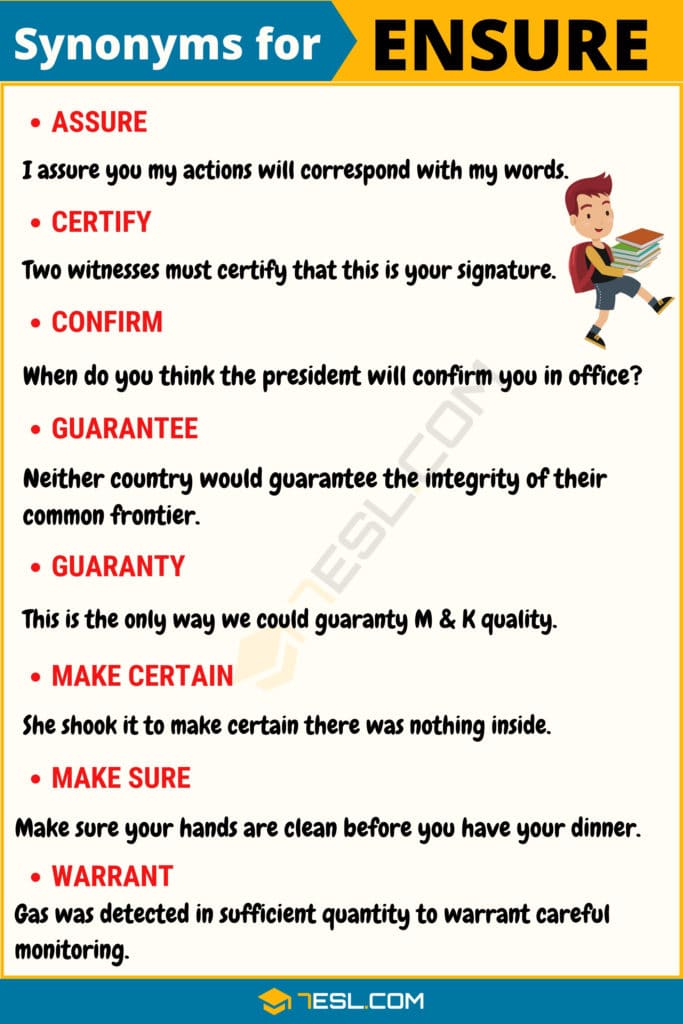
Image source: 7ESL
Frequently Asked Questions
A top choice for replacing "rest assured" is to use action-oriented language. Instead of a passive phrase, try "I can confirm that..." or "You can rely on our team to..." These alternatives are often more effective because they provide a concrete promise rather than just an emotional suggestion. In collaborative environments, "We are committed to ensuring..." also ranks among the most popular professional substitutes.
Not necessarily. "Self-assured" typically has a positive connotation, describing someone who is confident in their abilities and poised under pressure. Arrogance, however, implies an offensive display of superiority or an overestimation of one's importance. While a self-assured person knows their worth, an arrogant person believes they are worth more than others. The distinction often lies in how the confidence is expressed to those around them.
Generally, no. In modern American English, "insured" is strictly for financial protection against loss, while "assured" is for removing doubt. However, in British English, "assure" is specifically used for life insurance (Life Assurance), because death is a certainty. For almost all other contexts, including car, home, or health coverage, "insure" is the correct and expected term.
The most direct antonyms for the adjective form are doubtful , hesitant , and uncertain . If you are describing a person's character, opposites include timid , shy , or diffident . If you are describing an outcome, the opposites would be unlikely , improbable , or precarious . Choosing the right antonym depends entirely on whether you are discussing a person's state of mind or the likelihood of an event.
The most common professional alternative to "make sure" is ensure . For example, "Please ensure the report is submitted by Friday." If you need to sound even more formal, you might use verify or confirm . These words suggest a more rigorous process of checking for accuracy or completion, which is often preferred in technical or legal documentation.
The adverb "assuredly" is used to emphasize that something is certainly true or will certainly happen. It is a more formal way of saying "certainly" or "surely." For example, "The new policy will assuredly lead to higher productivity." It is often used to express a strong conviction or to reinforce a claim that the speaker believes is beyond dispute.
Key Takeaways for Choosing the Right Synonym
Mastering the nuances of "assured" allows you to communicate with greater precision and authority. Here are the essential points to remember:
- Identify the target: Use assure for people, ensure for outcomes, and insure for financial assets.
- Match the tone: Choose poised for professional settings and sanguine for literary or formal contexts.
- Avoid clichés: Replace "rest assured" with specific, action-oriented phrases like "we have confirmed."
- Watch for connotations: Be aware that "assured" can slide into complacent or smug if used to describe unearned confidence.
- Consider geography: Remember the British distinction regarding "Life Assurance" when writing for international audiences.
- Prioritize clarity: In technical writing, use the most common term to ensure your data is easily searchable and understood.
To improve your writing immediately, review your last three professional emails and replace any generic "rest assured" phrases with a specific confirmation of the actions you are taking.

What Are Effective Other Words for Maybe to Use in Your Writing?
Find the perfect synonym for maybe. Explore professional, formal, and creative alternatives to improve your writing and express uncertainty clearly.

How to Find Another Word for Was to Strengthen Your Writing
Improve your writing by finding the perfect synonym for was. Learn active voice tips, essay alternatives, and how to avoid repetitive verbs.

Finding Another Word for Demeanor and How to Choose the Right Synonym
Find another word for demeanor with 50+ synonyms like bearing and mien. Learn to choose the right term for professional and creative writing.